You want patriotic stories that are true, not just stirring. The best place to start is September 1814, when a flag, a poem and a song came together at Fort McHenry.
| Item | Value |
|---|---|
| Size of the Fort McHenry garrison flag | 30 by 42 feet |
| Time Mary Pickersgill’s team spent sewing it | Seven weeks |
| Dawn Key saw the flag still flying | September 14, 1814 |
| Size of the smaller storm flag | 17 by 25 feet |
| Date the anthem act was signed | March 3, 1931 |
These figures come from the National Park Service account and the Library of Congress first-drafts article, and they can change as historians refine details, so check the sources before you rely on them.
What makes a story patriotic?
A patriotic story is not only a victory. The ones that last tend to show character under pressure: ordinary people choosing a duty, a risk or a gift for their country.
This guide follows one such story in detail, the creation of “The Star-Spangled Banner,” because the records behind it are unusually rich. It involves a lawyer, a widow with a needle, a printer’s apprentice and a composer who fled Europe.
Readers who want portraits of individual people can turn to these stories of american heroes. The us history hub gives the wider timeline, and the military and veterans hub covers those who served.
The night Fort McHenry held
The story begins with an arrest, not a battle. Dr. William Beanes, a sixty-five-year-old physician and Revolutionary War veteran, helped local citizens arrest British stragglers who were looting, and he soon found himself in irons aboard a Royal Navy ship, according to the National Park Service.
Francis Scott Key, a Georgetown lawyer, took up the mission to win his release, travelling with prisoner exchange agent John Stuart Skinner. The British relented after seeing letters from wounded English soldiers who praised their medical treatment. Even so, the party was held until after the attack on Baltimore, because they had learned the British plans.
That left Key on a truce boat with a front-row seat to the bombardment. On a gloomy, rainy September 13 he watched Fort McHenry under fire from many miles away, as the National Park Service tells it. The stakes were high, since British troops had burned the White House, the Capitol and the Library of Congress in August 1814, as HISTORY notes.
The poem Key wrote afterward was written during the War of 1812, and it carries the line “Gave proof through the night that our flag was still there,” as HISTORY records. That one line is why this episode became a touchstone of American pride.
The flag that Mary Pickersgill sewed
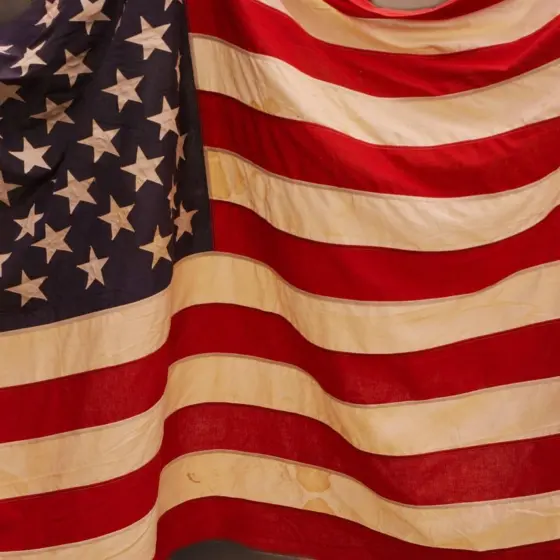
The flag Key saw was no accident of fate. Major George Armistead, the fort’s commander, ordered a garrison flag of 30 by 42 feet, along with a smaller storm flag of 17 by 25 feet, according to the National Park Service.
The job went to Mary Pickersgill, a 37-year-old widow and experienced ship and signal flag maker, who hand sewed the flag in 1813. She labored for seven weeks with a team that included her 13-year-old daughter, two nieces aged 13 and 15, and a 13-year-old African-American indentured servant, per the same National Park Service page.
The team around her, as that account describes it, was:
- Caroline, her daughter.
- Eliza Young and Margaret Young, her nieces.
- Grace Wisher, an indentured servant.
- Possibly Rebecca Young, her mother, who had taught her the trade.
The flag was too large for a house, so the team pieced together strips of wool bunting and laid it out on the floor of a brewery near Pickersgill’s Pratt Street home. That house is now the Star-Spangled Banner Flag House Museum, named here only as a factual example from the same National Park Service source.
From broadside to national anthem
Key’s words reached print within days. A broadside titled “Defence of Fort M’Henry” was set in type by Samuel Sands, an apprentice printer, in a run said to number 1,000 copies, according to the Library of Congress music blog. Only two copies are known to exist, the Library of Congress Magazine reports.
Key meant the words for “To Anacreon in Heaven,” a tune by John Stafford Smith that belonged to London’s Anacreontic Society. The Library says that, contrary to popular belief, it was not a drinking song, while HISTORY calls it a popular English drinking tune. When reliable sources disagree, the honest move is to say so.
Words and music were probably joined in print by October 19, in a Baltimore sheet music edition by Thomas Carr, at Key’s own request. By 1864 at least sixty-nine editions of the sheet music had been issued. Both details come from the Library of Congress music blog.
The Library of Congress has been collecting and researching the anthem’s story since 1909, as its Timeless Stories blog explains. Its magazine calls the Music Division the principal center for research about the national anthem.
Official recognition came in stages. HISTORY says President Woodrow Wilson announced in 1916 that the song should be played at all official events. Congress declared it the official anthem in 1931, and President Herbert Hoover signed the act on March 3, 1931, with the encouragement of bandleader John Philip Sousa, per the Library’s first-drafts article.
The full chronology is told in the history of the star spangled banner.
One charming detail: in its traditional form it is the only national anthem that ends in a question mark, according to the Library of Congress Magazine. The closing line asks whether the flag still waves “O’er the land of the free and the home of the brave?”
Stravinsky’s thank-you to a new homeland
Not every patriotic story starts with a native-born American. At the start of World War II, composer Igor Stravinsky fled Europe for America and wrote his own arrangement of the anthem as a gesture of thanks, the Library of Congress Magazine says.
In a 1941 letter to President Franklin D. Roosevelt, he wrote of “a desire to do my bit in the grievous times toward fostering and preserving the spirit of patriotism in this country.” Some critics objected to his version before anyone heard it, but Roosevelt ignored the plea.
The Los Angeles WPA Symphony and a chorus gave the first performance, and Stravinsky and the audience joined in singing the final two verses. In 1942, Stravinsky and the WPA gave his draft letter and manuscript to the Library of Congress, which reports all of this in the same magazine article.
Where to go next
Each of these pages follows one thread from this story:
- The pledge has its own origin, told in the history of the pledge of allegiance.
- For how the flag is handled and displayed, read american flag etiquette.
- The red, white and blue are covered in the meaning of the american flag colors.
- Holiday customs appear in fourth of july traditions.
- Tales that grew in the telling rather than in the archives are collected in american folklore stories.
- The music side of the story continues with famous patriotic songs.
Frequently asked questions
Who wrote “The Star-Spangled Banner”?
Show answer
Francis Scott Key wrote the words, and the tune is by British composer John Stafford Smith. HISTORY gives Key’s birth as August 1, 1779, and his death as January 11, 1843.
When did it become the national anthem?
Show answer
Congress declared it the official anthem in 1931, per the Library of Congress. The Library’s first-drafts article says President Hoover signed the act on March 3, 1931.
Was the tune really a drinking song?
Show answer
Sources differ. The Library of Congress says it was not, while HISTORY describes it as a popular English drinking tune, so treat either label with care.
How big was the flag Key saw?
Show answer
The garrison flag measured 30 by 42 feet, according to the National Park Service. Mary Pickersgill and her helpers sewed it over seven weeks.