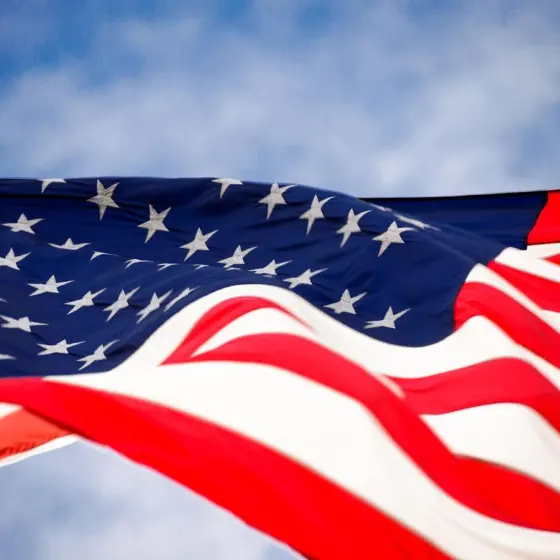
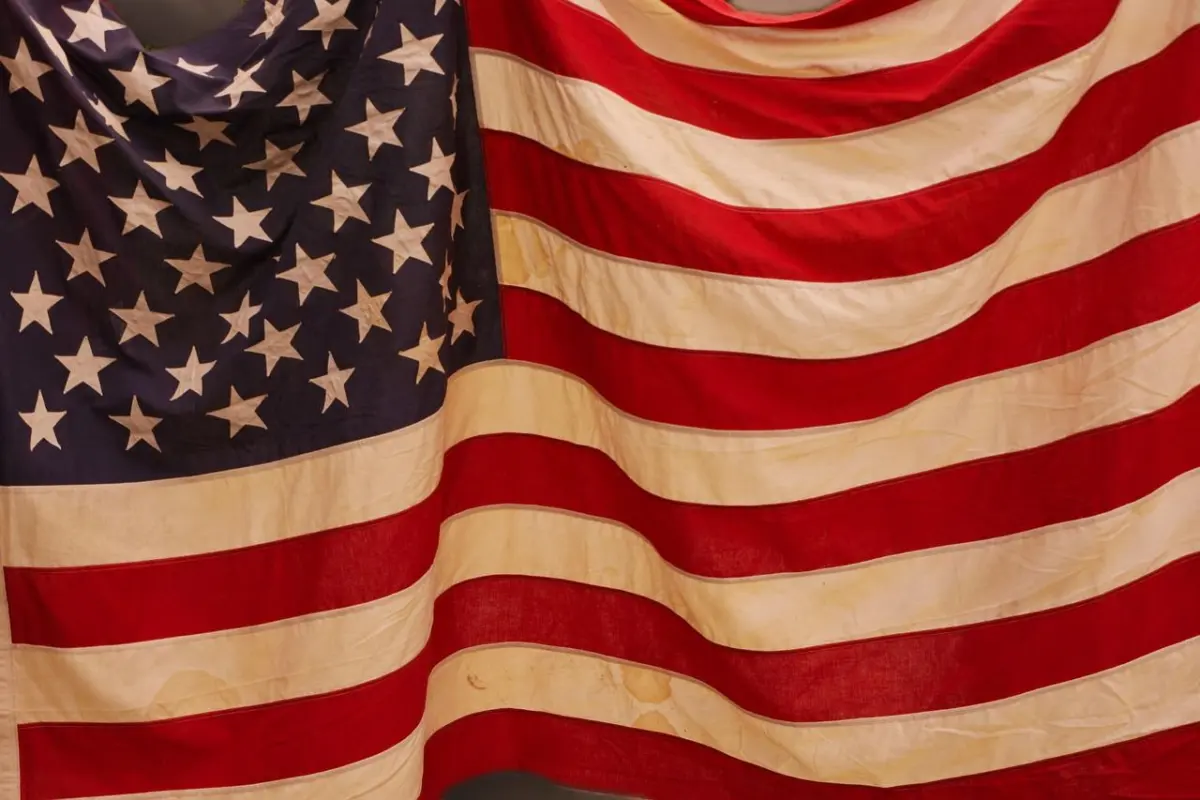
Wondering what the stripes and stars on your flag stand for? The meaning of the American flag colors dates to 1782: red is valor, white purity, blue vigilance, perseverance and justice.
This guide belongs to the site’s collection of patriotic stories about American symbols and history.
| Item | Meaning or value |
|---|---|
| Red | Valor and bravery (Great Seal, 1782) |
| White | Purity and innocence |
| Blue | Vigilance, perseverance and justice |
| Stripes | 13, alternating red and white |
| Stars on the current flag | 50, white in a blue field |
| Flag Resolution | June 14, 1777 |
These figures come from State Symbols USA and Mental Floss. Details can change, so check the sources before you rely on them.
What do the red, white and blue colors mean?
The official national colors of the United States can be seen on the flag: red, white and blue, as State Symbols USA explains. Each color has a traditional meaning that Congress set out in 1782.
- Red: valor and bravery.
- White: purity and innocence.
- Blue: vigilance, perseverance and justice.
The original 1782 wording was a little different. Charles Thomson, Secretary of Congress, wrote that red meant “hardiness & valour,” so modern summaries translate that as valor and bravery.
One detail surprises many people. The colors did not have a specified meaning when the flag was adopted; the meanings were defined later, for the Great Seal.
How the 1782 Great Seal gave the colors their meaning
The Flag Resolution passed by the Continental Congress on June 14, 1777, described the flag but did not explain its colors. Mental Floss quotes it as calling for “thirteen stripes, alternate red and white” and “thirteen stars, white in a blue field, representing a new constellation.”
The symbolism arrived later. According to the U.S. Department of State’s history of the Great Seal, the seal became a reality on June 20, 1782, after years of committee work.
Thomson’s “Remarks and Explanation” accompanied the design. He noted that the colors of the seal’s shield were those used in the flag, and he explained them one by one:
- White signifies purity and innocence.
- Red signifies hardiness and valor.
- Blue, the color of the chief at the top of the shield, signifies vigilance, perseverance and justice.
The shield carried its own message about unity. Thomson wrote that the alternating pales “represent the several states all joined in one solid compact entire,” supporting a chief that unites the whole and represents Congress, according to the State Department document.
The flag designer who helped shape the seal
Congress turned to a second committee in March 1780. It asked Francis Hopkinson, described as the Philadelphian who had designed the American flag, to serve as consultant.
The same State Department history says the committee was influenced by the flag adopted in 1777. It contributed 13 red and white stripes and a constellation of 13 six-pointed stars to the final seal.
What the stripes and stars stand for
The stripes are the easier symbol to read. Mental Floss notes that the early flag had 13 red-and-white stripes to represent the 13 colonies, a feature that remains on the current flag.
The stars sit in the blue field. The 1777 resolution called them “a new constellation,” and Thomson used the same idea on the seal.
In his words, the constellation “denotes a new State taking its place and rank among other sovereign powers,” as quoted by State Symbols USA. That sentence describes the seal, not the flag, but the shared imagery explains why a growing field of stars feels natural.
A quick way to remember it:
- Stripes recall the original colonies.
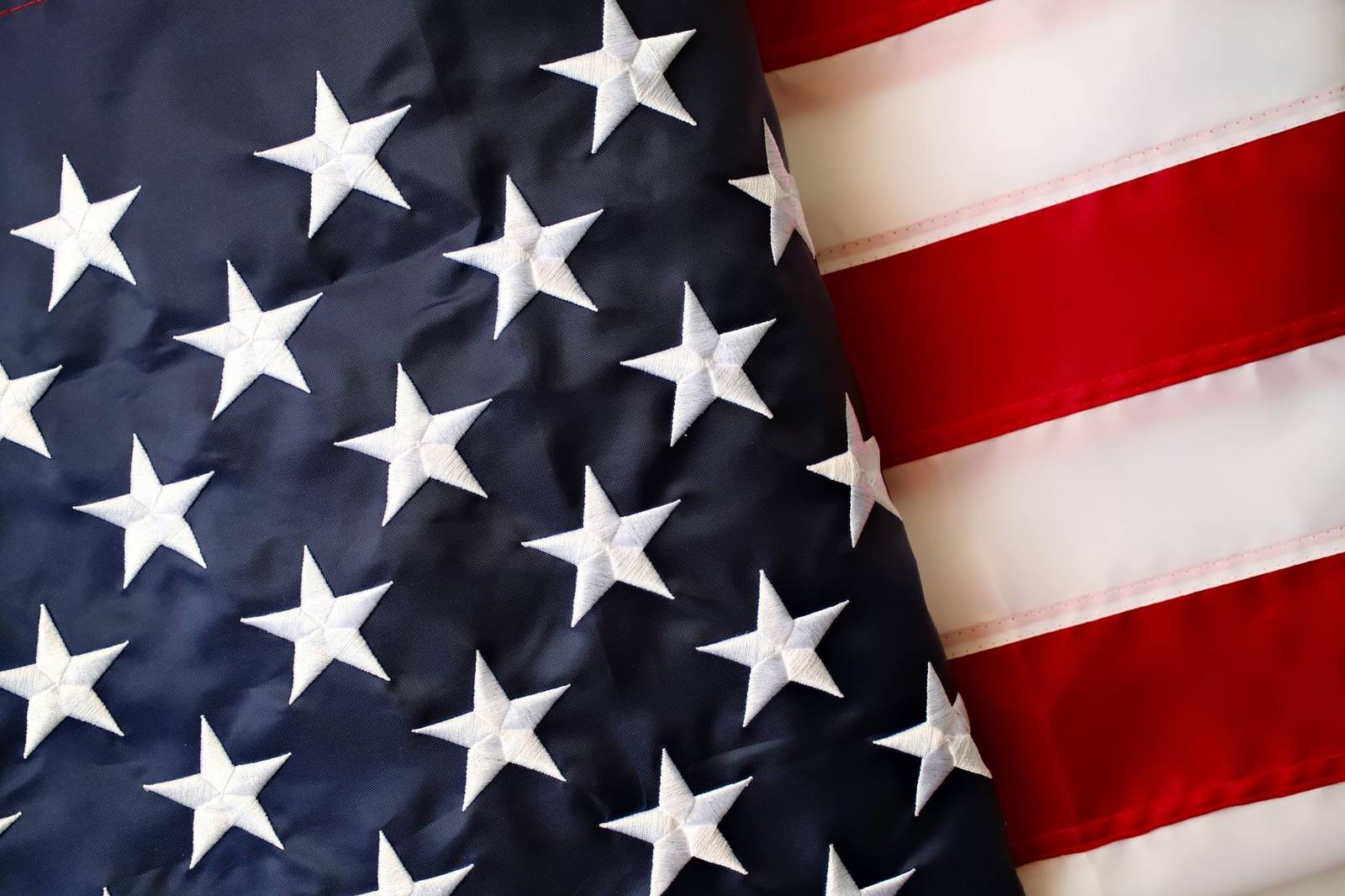
- Stars in the blue field stand for the states of the union.
- Red, white and blue carry the virtues Congress named in 1782.
How the flag changed while the colors stayed
The design has been updated many times, yet the palette never moved. The American Battlefield Trust counts the current flag as the twenty-seventh version of the national flag.
- Before 1777: the Continental Colors had thirteen red and white stripes and the United Kingdom’s flag in the upper-left-hand corner. The Continental Army flew it until 1777, per the Trust.
- 1777: the resolution replaced the corner with stars in a blue field.
- 1814: Francis Scott Key wrote the Star-Spangled Banner based on the flag with 15 stars and 15 stripes flying over Fort McHenry, as Mental Floss recounts.
- 1818: the Flag Act of 1818 set the 13 stripes in place and let the number of stars grow with each new state.
- 1960: the flag was last changed when Hawaii became the last state to join the union.
As of Mental Floss’s July 2026 article, the flag with 13 stripes and 50 stars is the longest-serving design in the nation’s history.
Showing the flag with care
Knowing what the colors represent makes it easier to treat the flag well. Our guide to american flag etiquette covers how to display and handle it.
The flag also has its own day. Flag Day falls on June 14 each year, honoring the date the Flag Resolution was adopted, according to Mental Floss.
For ideas about how the flag fits into summer celebrations, read about fourth of july traditions.
Frequently asked questions
Did the colors mean anything when the flag was adopted?
Show answer
Not officially. The colors had no specified meaning when the flag was adopted; the meanings were defined later, for the Great Seal, according to State Symbols USA.
What does each color stand for?
Show answer
Red stands for valor and bravery, white for purity and innocence, and blue for vigilance, perseverance and justice. These come from Charles Thomson’s 1782 explanation of the Great Seal.
Why does the flag have 13 stripes?
Show answer
The stripes represent the 13 colonies, as Mental Floss explains. The Flag Act of 1818 fixed the number at 13 while letting the stars change.
When was the flag last changed?
Show answer
The flag was last changed in 1960, when Hawaii became the last state to join the union, per Mental Floss in its July 2026 article.